

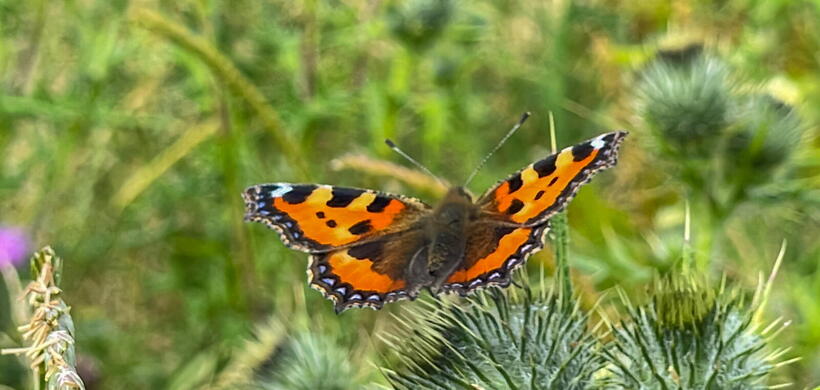
What Is No Mow May?
No Mow May is a campaign that encourages people to leave their lawns uncut throughout May. By allowing grass and wildflowers to grow naturally, gardens and green spaces become valuable habitats for wildlife, especially pollinators like bees and butterflies emerging after winter.
The idea is simple: instead of mowing every week, you let nature take the lead for a while. Even a small patch of longer grass can provide nectar, shelter and breeding spaces for insects and other wildlife.
How small spaces can make a big difference for biodiversity
Let part of your lawn grow
If you have a tiny garden, you do not need to stop mowing completely. Leaving just one section or border to grow longer can still make a difference.
Welcome wildflowers
Daisies, clover and dandelions may appear on their own and are incredibly useful for pollinators. Avoid removing them during spring and early summer.
Use pots and containers
Balconies and patios can support wildlife too. Containers filled with plants like lavender, thyme or wildflowers attract bees and butterflies throughout the warmer months.
Good options include:
- Lavender
- Thyme
- Honeysuckle
- Jasmine
Think vertically
In compact spaces, vertical planting can have a big impact. Hanging baskets, wall planters and climbing plants on trellises add greenery without taking up floor space.
Add water for wildlife
A shallow dish with water and a few pebbles gives bees and insects somewhere safe to drink, especially during dry weather.
Create shelter
Bird feeders, insect hotels and dense plants can provide nesting and resting spaces, even on apartment balconies several floors up.
No Mow May shows that supporting wildlife does not require a large garden. A window box of flowers, a few pollinator-friendly pots or a small patch of unmown grass can all help create healthier habitats for nature.
Every small outdoor space has the potential to become a mini haven for birds, bees and butterflies – helping make our towns and cities greener, more vibrant and better for wildlife.